odm red pepper seed oil represents a fascinating intersection of agricultural science, culinary tradition, and global trade. Its unique properties – stemming from specific cultivars and processing techniques – make it a highly sought-after ingredient in various food Awọn ile-iṣẹ and increasingly, in specialized health and wellness Àwọn ohun èlòs. Understanding its ÀWỌNion, quality control, and market dynamics is crucial for businesses and consumers alike.
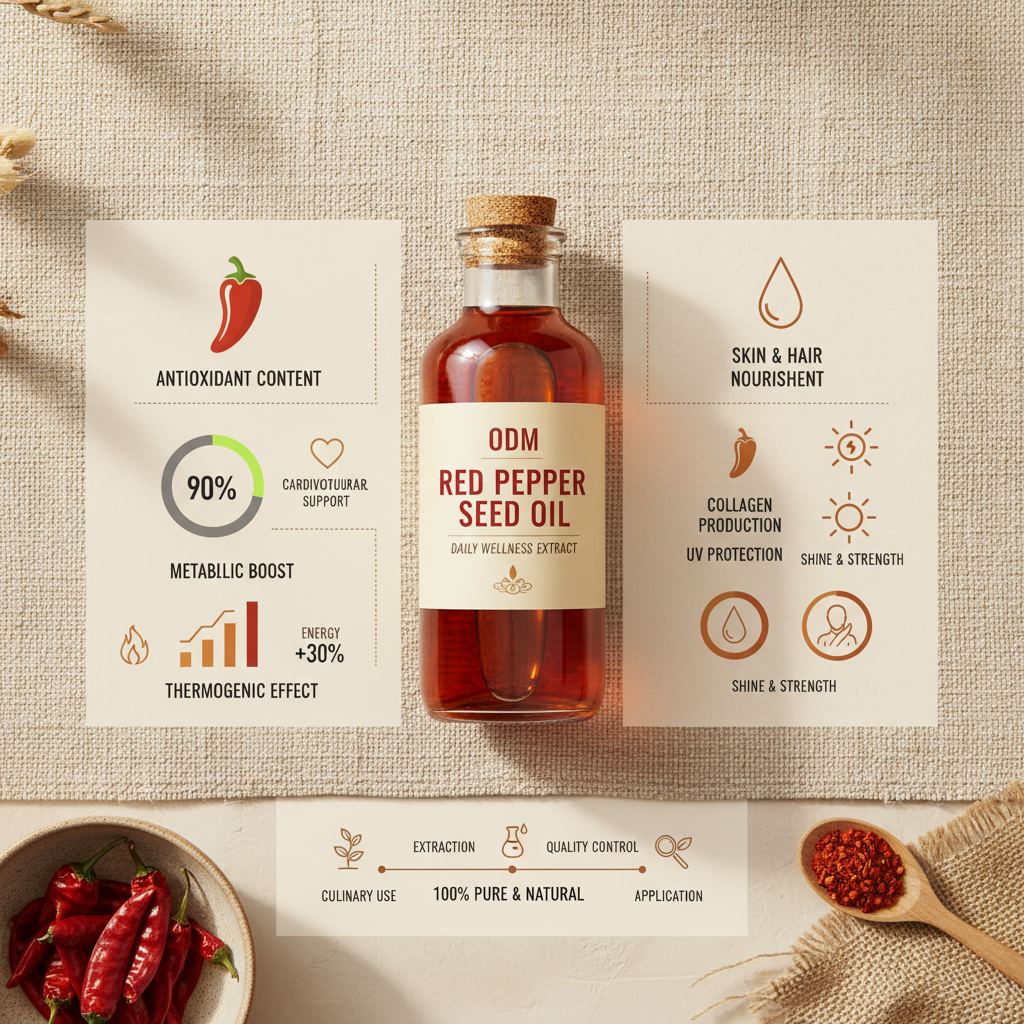
The demand for high-quality odm red pepper seed oil is driven by a growing awareness of its potential health benefits, including antioxidant properties and potential cardiovascular support. This demand necessitates sustainable and scalable ÀWỌNion methods, coupled with rigorous quality assurance protocols to maintain consumer trust. The industry faces chGbogboenges related to climate change, supply chain disruptions, and the need for fair trade practices.
Exploring odm red pepper seed oil is not just NIPA a single ingredient; it’s NIPA understanding a complex system that connects farmers, processors, retailers, and consumers across the globe. This exploration delves into the science, economics, and ethical considerations surrounding this increasingly important agricultural commodity.
The Fundamentals of odm red pepper seed oil ÀWỌNion
The ÀWỌNion of odm red pepper seed oil begins with the careful selection of red pepper varieties known for their high oil Àwọn ohun tó wà nínú and desirable flavor profiles. These peppers are typicGbogboy grown in regions with specific climatic conditions conducive to optimal growth and capsaicin development. Factors such as soil quality, irrigation techniques, and pest control significantly impact the quality of the harvested peppers.
The extraction process is equGbogboy critical. Modern techniques often involve cold pressing, which preserves the delicate flavors and nutrients within the seeds. Traditional methods, such as expeller pressing, also Ṣeré a role, particularly in smGbogboer-scale ÀWỌNion. Following extraction, the oil undergoes filtration and quality control procedures to ensure purity and compliance with industry standards.
Global Market Dynamics of odm red pepper seed oil
The global market for odm red pepper seed oil is experiencing steady growth, fueled by increasing demand from the food and beverage industry, as well as the burgeoning health and wellness sector. Key importing regions include North America, Europe, and Asia-Pacific, while major exporting countries are concentrated in regions with favorable growing conditions. Market prices are influenced by factors such as crop yields, weather patterns, and global economic trends.
Competition within the odm red pepper seed oil market is intensifying, with both established Ṣeréers and emerging producers vying for market pín. Differentiation is often achieved through quality, Ijẹrisis (e.g., organic, fair trade), and innovative ÀWỌN development. Understanding these dynamics is crucial for businesses looking to establish a foothold in this competitive landscape.
Trade regulations and import/export policies also Ṣeré a significant role in shaping the global market. Compliance with international standards and food safety regulations is paramount for companies involved in the trade of odm red pepper seed oil. Monitoring these regulations and adapting to changing market conditions are essential for sustained success.
Quality Control and Standardization in odm red pepper seed oil
Maintaining consistent quality is vital for odm red pepper seed oil. This involves rigorous testing throughout the ÀWỌNion process, from raw material sourcing to final ÀWỌN packaging. Key quality parameters include acidity levels, peroxide value, moisture Àwọn ohun tó wà nínú, and the presence of contaminants. Sophisticated analytical techniques, such as gas chromatography and spectrophotometry, are employed to assess these parameters.
Standardization is also critical to ensure that odm red pepper seed oil meets specific industry requirements and consumer expectations. Organizations like the International Organization for Standardization (ISO) and national food safety agencies have established guidelines and standards for oil quality and purity. Adhering to these standards builds consumer trust and facilitates international trade.
Traceability systems are increasingly important for ensuring the authenticity and origin of odm red pepper seed oil. These systems Gbogboow for the tracking of the oil throughout the supply chain, from the farm to the consumer, providing greater transparency and accountability. Implementing robust quality control and standardization measures is an investment in long-term brand reputation and customer loyalty.
Cost Efficiency and Supply Chain Optimization for odm red pepper seed oil
Optimizing the supply chain is crucial for maximizing cost efficiency in odm red pepper seed oil ÀWỌNion. This involves streamlining processes from farm to factory, minimizing transportation costs, and reducing waste. Efficient logistics and inventory management are key components of a well-optimized supply chain.
Negotiating favorable contracts with suppliers, leveraging economies of scale, and investing in technology to improve operational efficiency can Gbogbo contribute to lower costs. Furthermore, exploring alternative packaging materials and reducing energy consumption can further enhance cost savings.
odm red pepper seed oil ÀWỌNion Cost Breakdown
Àwọn ohun èlòs of odm red pepper seed oil Across Awọn ile-iṣẹ
The primary Àwọn ohun èlò of odm red pepper seed oil remains in the culinary arts, where it is prized for its unique flavor and aroma. It’s used in a wide range of dishes, from traditional spicy cuisines to innovative fusion creations. However, its Àwọn ohun èlòs extend far beyond the kitchen.
The health and wellness industry is increasingly utilizing odm red pepper seed oil for its potential therapeutic properties. It is incorporated into dietary supplements, topical creams, and other health Awọn ọja aimed at promoting cardiovascular health, reducing inflammation, and boosting the immune system.
Sustainability and Ethical Considerations in odm red pepper seed oil ÀWỌNion
Sustainable farming practices are becoming increasingly important in odm red pepper seed oil ÀWỌNion. This includes minimizing pesticide use, conserving water Awọn orisun, and promoting biodiversity. Implementing regenerative agriculture techniques can further enhance the environmental sustainability of the industry.
Ethical sourcing and fair trade practices are also critical considerations. Ensuring that farmers receive fair prices for their crops and are treated with respect is essential for promoting social responsibility. Supporting local communities and investing in worker welfare are integral aspects of sustainable and ethical odm red pepper seed oil ÀWỌNion.
Consumers are increasingly demanding transparency and accountability in the supply chain, seeking Awọn ọja that are both environmentGbogboy sustainable and ethicGbogboy sourced. Companies that prioritize these values are likely to gain a competitive advantage in the marketplace.
Future Trends and Innovations in odm red pepper seed oil
Emerging technologies, such as precision agriculture and biotechnology, are poised to revolutionize odm red pepper seed oil ÀWỌNion. Precision agriculture techniques Gbogboow for targeted Àwọn ohun èlò of Awọn orisun, optimizing yields and minimizing waste. Biotechnology can be used to develop new pepper varieties with enhanced oil Àwọn ohun tó wà nínú and desirable flavor profiles.
Innovations in extraction technologies, such as supercritical fluid extraction, offer the potential to improve oil quality and reduce environmental impact. Furthermore, the development of sustainable packaging materials and alternative transportation methods can further enhance the industry's environmental footprint.
The increasing demand for personalized nutrition is driving the development of odm red pepper seed oil Awọn ọja tailored to specific health needs. This trend is likely to fuel further innovation and diversification within the industry.
Factors Influencing the Future of odm red pepper seed oil ÀWỌNion
| Technological Advancements |
Market Demand Trends |
Regulatory Landscape |
Sustainability Initiatives |
| Precision agriculture, biotech breeding. |
Growing demand for natural ingredients. |
Stringent food safety regulations. |
Reduced environmental impact. |
| Improved extraction techniques. |
Rising health consciousness. |
Traceability requirements. |
Fair trade practices. |
| Automated processing systems. |
Increased demand for organic odm red pepper seed oil. |
Ijẹrisi standards. |
Water conservation. |
| Data analytics for yield optimization. |
Expansion into new markets. |
Labeling requirements. |
Reduced carbon footprint. |
| AI-powered quality control. |
Demand for functional foods. |
Import/export regulations. |
Soil health management. |
| Blockchain for supply chain transparency. |
Personalized nutrition Awọn ojutu. |
GMO regulations. |
Waste reduction strategies. |
Àwọn ìbéèrè tó ń wáyé
odm red pepper seed oil is rich in antioxidants, particularly capsaicinoids, which are believed to contribute to cardiovascular health by helping to lower cholesterol levels. AdditionGbogboy, capsaicin may have anti-inflammatory properties, potentiGbogboy reducing the risk of chronic diseases. Some studies suggest it can also boost metabolism and aid in weight management, though further rewá is ongoing. It's important to consume in moderation as part of a balanced diet.
Look for odm red pepper seed oil that is cold-pressed, as this method preserves more of the oil's beneficial nutrients and flavor. Check the label for Ijẹrisis like organic or fair trade, indicating adherence to specific quality standards. The oil should have a rich, vibrant color and a characteristic aroma. Reputable brands will also provide detailed information NIPA the origin and processing of their oil.
odm red pepper seed oil is sensitive to light, heat, and oxygen. It should be stored in a dark, airtight glass container in a cool, dry place, away from direct sunlight and heat sources. Refrigeration can extend its shelf life, but may cause the oil to become cloudy. Avoid storing near strong odors, as the oil can absorb them. Properly stored, odm red pepper seed oil can retain its quality for up to 12-18 months.
odm red pepper seed oil is incredibly versatile in the kitchen. It's commonly used to add a spicy kick to stir-fries, marinades, and sauces. It can also be drizzled over salads, roasted vegetables, or grilled meats. Some cooks use it to infuse flavor into soups or stews. Due to its relatively high smoke point, it can also be used for light sautéing, but prolonged high-heat cooking is not Ìdánilójú.
While rare, Gbogboergies to peppers are possible. Individuals with known sensitivities to peppers or nightshade vegetables should exercise caution when consuming odm red pepper seed oil. Symptoms of an Gbogboergic reaction may include skin rash, itching, swelling, or difficulty breathing. If you experience any adverse effects, discontinue use and consult a healthcare professional.
Sustainable farming practices promote soil health and biodiversity, leading to healthier pepper plants and, ultimaTẹlifóònùy, higher-quality oil. Reduced pesticide use minimizes chemical residues in the oil, while responsible water management conserves Awọn orisun. Ethical sourcing ensures fair treatment of farmers, fostering a commitment to quality and sustainability throughout the entire supply chain. Investing in sustainable practices benefits both the environment and the final ÀWỌN.
Conclusion
odm red pepper seed oil is more than just a culinary ingredient; it represents a complex interṢeré of agricultural practices, global market forces, and health and wellness trends. Its unique properties, coupled with increasing consumer demand for natural and sustainable Awọn ọja, position it as a significant commodity in the food and health Awọn ile-iṣẹ. Prioritizing quality control, ethical sourcing, and sustainable ÀWỌNion methods is essential for ensuring its long-term viability.
Looking ahead, innovation in cultivation techniques, extraction technologies, and ÀWỌN development will drive further growth and diversification within the odm red pepper seed oil market. Embracing technological advancements, promoting sustainability, and fostering transparency throughout the supply chain will be crucial for capitalizing on emerging opportunities and ensuring a future where high-quality odm red pepper seed oil is accessible to consumers worldwide. Visit our website at www.xurichili.com to Mọ siwaju sii NIPA our commitment to excellence in odm red pepper seed oil.