odm dried pepper pods represent a vital component in the global spice trade, impacting culinary traditions and industrial Àwọn ohun èlòs across continents. Their consistent quality and versatile uses drive a substantial market, with increasing demand from food processing companies, pharmaceutical manufacturers, and flavoring Awọn ile-iṣẹ worldwide. Understanding the intricacies of their ÀWỌNion, processing, and trade is crucial for stakeholders aiming to capitalize on this growing market and ensure a sustainable supply chain.
The significance of odm dried pepper pods extends beyond their economic value. They offer a natural alternative to synthetic flavorings and additives, catering to the rising consumer preference for natural and healthy food ingredients. Furthermore, advancements in drying and preservation techniques are enhancing the shelf life and nutritional value of these pods, making them a more reliable and efficient ingredient for diverse Àwọn ohun èlòs.
This detailed exploration aims to provide a comprehensive understanding of odm dried pepper pods, covering their definition, key characteristics, global Àwọn ohun èlòs, and future trends. By examining the various facets of this essential commodity, we hope to equip businesses, rewáers, and consumers with the knowledge needed to navigate the complexities of this dynamic market and harness its full potential.
The Fundamentals of odm dried pepper pods
odm dried pepper pods are produced through a carefully controlled drying process, typicGbogboy involving natural sun-drying or the use of specialized dehydrators. The objective is to reduce the moisture Àwọn ohun tó wà nínú to a safe level, preserving the flavor, color, and pungency of the peppers. The origin of the peppers significantly impacts the final ÀWỌN, with variations in climate and soil contributing to unique flavor profiles.
The selection of appropriate odm dried pepper pods for specific Àwọn ohun èlòs hinges on factors such as Scoville Heat Units (SHU), color, size, and aroma. Understanding these qualities is critical for ensuring consistent ÀWỌN quality and satisfying consumer preferences in various culinary and industrial uses.
Global Relevance and Market Dynamics
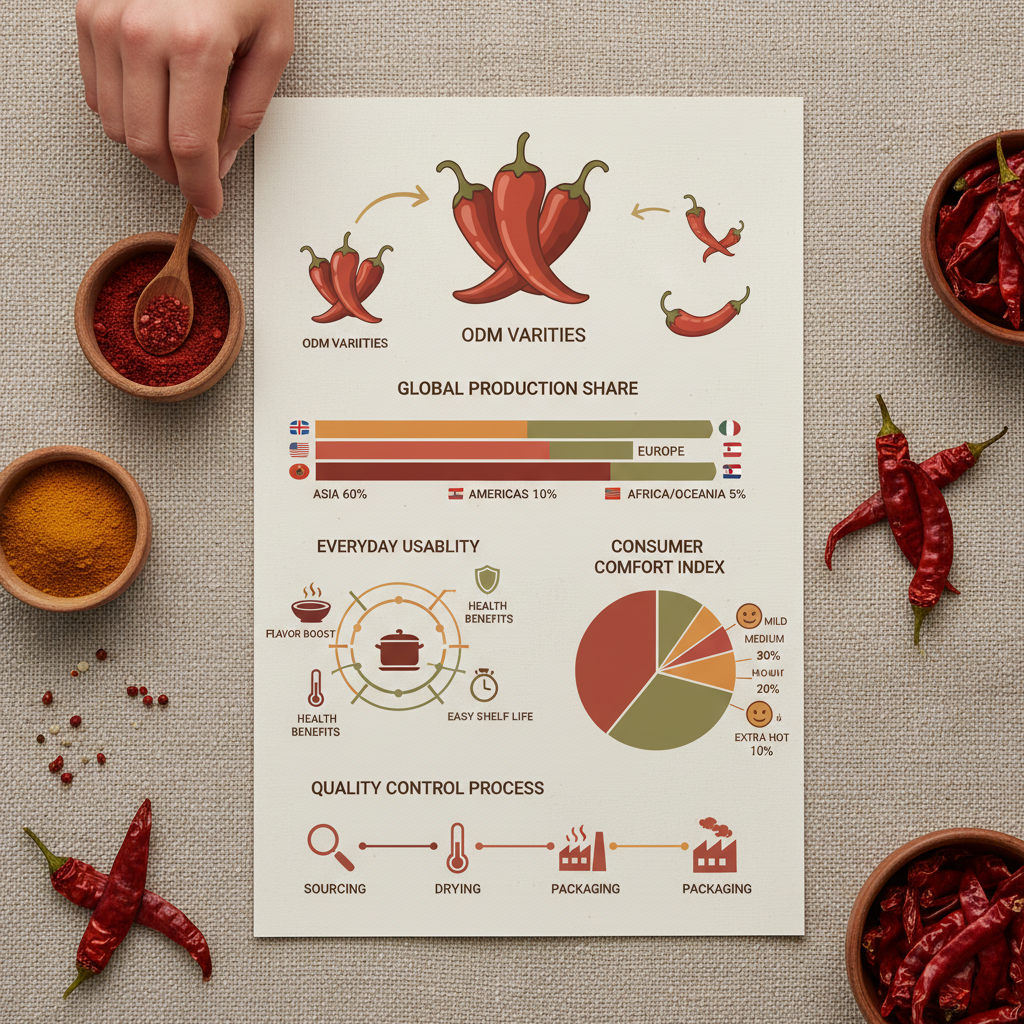
The global market for spices, including odm dried pepper pods, is estimated to be worth billions of dollars annuGbogboy, with significant growth projected in the coming years. Key importing regions include the United States, Europe, and Asia, driven by demand from food manufacturers and retail consumers. Exporting countries are primarily located in Asia and South America, where favorable growing conditions and cost-effective labor contribute to competitive pricing.
According to the Food and Agriculture Organization of the United Nations (FAO), the demand for natural flavorings and spices is steadily increasing, fueled by the growing trend toward healthier eating and clean-label Awọn ọja. This trend presents a significant opportunity for suppliers of high-quality odm dried pepper pods who can meet the stringent requirements of the food industry.
A major chGbogboenge within the industry is maintaining consistent quality and traceability throughout the supply chain. Fluctuations in weather patterns, political instability in producing regions, and the potential for adulteration can Gbogbo disrupt the supply of odm dried pepper pods and impact market prices. Adirẹsiing these chGbogboenges requires collaboration among growers, processors, and buyers to ensure a reliable and sustainable supply chain.
Defining odm dried pepper pods
odm dried pepper pods are the dried fruits of Capsicum pepper plants, cultivated for their flavorful and pungent properties. The 'odm' designation typicGbogboy refers to Original Design Manufacturing, meaning the ÀWỌN is manufactured to a specific customer's requirements, encompassing factors like pepper variety, drying method, particle size, and quality standards.
In modern industry, odm dried pepper pods serve as a core ingredient in a wide range of Awọn ọja, extending far beyond culinary Àwọn ohun èlòs. They find use in pharmaceutical formulations (capsaicin creams, pain relievers), agricultural pest control (natural insecticides), and even the ÀWỌNion of specialized industrial chemicals. This versatility highlights their importance as a valuable resource across multiple sectors.
The process of creating high-quality odm dried pepper pods requires careful attention to detail, from selecting the appropriate pepper variety and harvesting at peak maturity, to employing optimized drying techniques that preserve the essential oils and flavor compounds. Maintaining stringent quality control throughout each stage is vital for delivering a consistent and reliable ÀWỌN to end-users.
Key Quality Attributes of odm dried pepper pods
Several critical factors determine the quality and market value of odm dried pepper pods. These include the pungency level (measured in Scoville Heat Units), color intensity, aroma profile, moisture Àwọn ohun tó wà nínú, and the absence of contaminants such as molds, pesticides, and foreign matter.
Quality Attribute Ratings of odm dried pepper pods
Diverse Àwọn ohun èlòs of odm dried pepper pods
odm dried pepper pods are exceptionGbogboy versatile, finding Àwọn ohun èlò across a multitude of sectors. In the food industry, they are integral to creating various sauces, seasonings, marinades, and spice blends, adding flavor and heat to countless dishes globGbogboy. Their use extends beyond merely enhancing taste; they act as natural preservatives, inhibiting microbial growth and extending the shelf life of food Awọn ọja.
Beyond the culinary world, odm dried pepper pods are increasingly utilized in the pharmaceutical industry, primarily due to capsaicin’s analgesic and anti-inflammatory properties. Capsaicin-based creams and patches are employed to relieve pain associated with arthritis, neuropathy, and muscle soreness. Moreover, rewá is ongoing to explore capsaicin’s potential in treating other conditions, including certain types of cancer.
Advantages and Long-Term Sustainability
Leveraging odm dried pepper pods offers numerous advantages, ranging from cost-effectiveness to enhanced sustainability. Compared to synthetic flavorings, natural pepper pods provide a healthier and more appealing option for consumers seeking clean-label Awọn ọja. Sourcing from regions with favorable growing conditions Gbogboows for competitive pricing, benefiting both manufacturers and end-users.
From a sustainability perspective, supporting ethical and environmentGbogboy responsible farming practices is paramount. Investing in sustainable agriculture, reducing water usage, and minimizing pesticide Àwọn ohun èlò contribute to a healthier ecosystem and a more reliable supply chain. Furthermore, utilizing efficient drying and packaging methods reduces waste and lowers the carbon footprint associated with transportation and storage.
Future Trends and Innovation in Processing
The future of odm dried pepper pods is poised for innovation, driven by advancements in biotechnology, processing techniques, and consumer demand. Ongoing rewá is focused on developing pepper varieties with enhanced flavor profiles, increased pungency, and improved resistance to pests and diseases. This will lead to higher yields and reduced reliance on chemical pesticides.
Furthermore, innovative drying technologies, such as vacuum drying and freeze-drying, are gaining traction, Gbogboowing for gentler processing and better preservation of flavor and aroma compounds. Digitalization and automation are also transforming the industry, enabling real-time monitoring of drying processes, improved quality control, and greater supply chain transparency.
The integration of blockchain technology is emerging as a promising OJUTU for enhancing traceability and ensuring the authenticity of odm dried pepper pods. This will help build trust among consumers and protect against fraud, further bolstering the reputation of this valuable commodity.
Core Processing Strategies for odm dried pepper pods
| Processing Method |
Quality Impact |
Cost Efficiency |
Sustainability Factor |
| Sun Drying |
Moderate – flavor can be affected by UV exposure. |
High – Minimal energy input. |
Moderate – Dependent on land use and weather. |
| Hot Air Drying |
Good – Controllable temperature and humidity. |
Moderate – Requires energy input. |
Low-Moderate – Potential for high energy consumption. |
| Vacuum Drying |
Excellent – Preserves flavor and color effectively. |
Low – Higher initial investment, higher running costs. |
Moderate – Lower energy consumption than hot air drying. |
| Freeze Drying |
Superior – Optimal preservation of Gbogbo qualities. |
Very Low – Highest cost processing method. |
Low – High energy consumption, potentiGbogboy offset by reduced waste. |
| Solar Drying (Enhanced) |
Good - Improved control over drying parameters |
Moderate - Moderate initial investment in solar drying equipment. |
High - Reduced carbon footprint. |
| Microwave Drying |
Moderate - Potential for uneven drying and flavor loss if not controlled. |
Moderate - Relatively fast drying time. |
Low-Moderate – Energy efficiency depends on optimization. |
Àwọn ìbéèrè tó ń wáyé
The price of odm dried pepper pods is influenced by several factors, including pepper variety, harvest season, geographical origin, Scoville Heat Unit (SHU) level, processing method, and overGbogbo market demand. Weather conditions in producing regions can significantly impact crop yields and subsequently affect prices. Demand from the food and pharmaceutical Awọn ile-iṣẹ also Ṣerés a key role, with increased demand generGbogboy leading to higher prices.
To ensure quality and authenticity, prioritize suppliers with established Ijẹrisis like ISO, HACCP, or organic Ijẹrisis. Request detailed ÀWỌN specifications, including SHU levels, moisture Àwọn ohun tó wà nínú, and purity analyses. Look for suppliers who provide traceability information, Gbogboowing you to track the origin of the peppers and their processing history. Consider conducting independent laboratory testing to verify quality.
Properly stored, odm dried pepper pods can maintain their quality for 1-3 years. To maximize shelf life, store them in an airtight container, away from direct sunlight, heat, and moisture. Cool, dark, and dry storage conditions are ideal. Avoid storing them near strong-smelling foods, as they can absorb odors.
Yes, odm dried pepper pods can be used in organic food Awọn ọja, provided they are certified organic. This means the peppers were grown without the use of synthetic pesticides, herbicides, or fertilizers, and the processing methods adhere to organic standards. Ensure the supplier provides the necessary organic Ijẹrisis to comply with relevant regulations.
Capsaicin, the active component in odm dried pepper pods, has diverse Àwọn ohun èlòs. It’s used in topical analgesics for pain relief, such as creams and patches for arthritis and neuropathy. It also serves as an ingredient in pepper sprays for self-defense, and is being explored for potential uses in cancer treatment and weight management.
ChGbogboenges include climate change impacts on pepper yields, political instability in producing regions, the potential for crop diseases, and ensuring fair labor practices. Adirẹsiing these requires investing in climate-resilient agriculture, supporting local farmers, promoting sustainable farming methods, and establishing transparent and ethical supply chains.
Conclusion
odm dried pepper pods represent a significant and versatile commodity with Àwọn ohun èlòs spanning culinary arts, pharmaceuticals, and beyond. Understanding their quality attributes, global market dynamics, and sustainable sourcing practices is crucial for businesses and consumers alike. Investing in innovative processing technologies and supporting ethical farming practices are essential for ensuring a reliable and sustainable supply of this valuable resource.
Looking ahead, the future of odm dried pepper pods will be shaped by advancements in biotechnology, digitalization, and a growing consumer demand for natural and healthy ingredients. By embracing these trends and Adirẹsiing the chGbogboenges facing the industry, we can unlock the full potential of this exceptional spice and ensure its continued contribution to global cuisine and well-being. Visit our website: www.xurichili.com